Running your own business or being a freelancer in the UK can provide you with great financial freedom. You will also have full control over your taxes. One key element of your taxes will be National Insurance. A common question many new sole traders ask is: do self employed pay National Insurance? Yes, they do. If you make profits above the statutory thresholds set by HM Revenue & Customs (HMRC), you will need to pay National Insurance to ensure you qualify for the UK State Pension and other social security benefits.
It can be complex to understand what HMRC requires. This guide will give you all the information you need to know about the current National Insurance contribution rates and thresholds.
Understanding National Insurance Classes as a Sole Trader
As an employee, you will have Class 1 National Insurance automatically deducted from your wages. As a self-employed person, you will have your National Insurance contributions calculated based on your net profits.
Previously, self-employed people had to pay both Class 2 and 4 National Insurance. However, HMRC has updated the rules, and it is now much simpler:
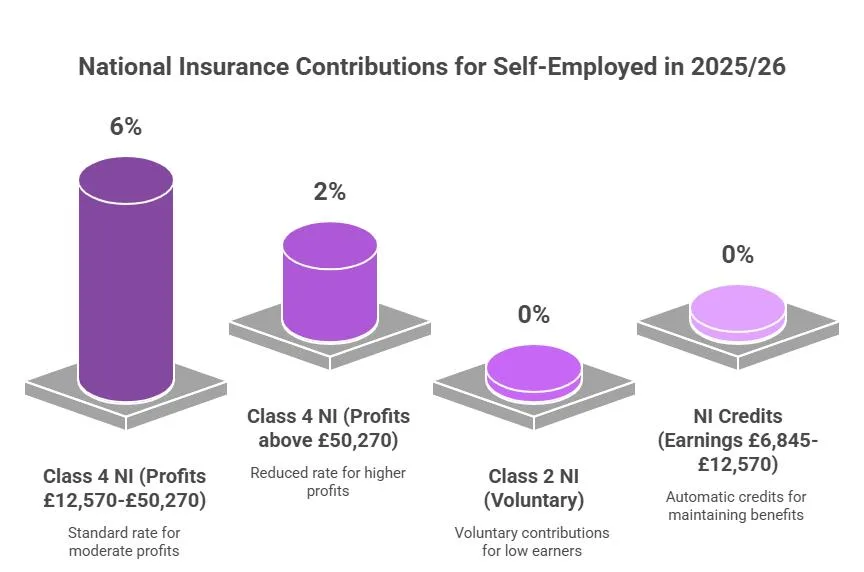
- Class 2 National Insurance – No longer mandatory. If you are a sole trader and have profits over the Small Profits Threshold (£6,725), you will automatically have the contributions added and will not have to pay. If you have profits under this amount, you can still choose to pay voluntarily (Expected to be £3.45 per week).
- Class 4 National Insurance – Main Rate of National Insurance for self-employed people. This is calculated as a percentage of your profits over the Lower Profits Limit.
Understanding how the thresholds work will help you budget correctly throughout the year.
National Insurance Contribution Rates
Below are the main National Insurance contribution thresholds and rates for self-employed NIC people in the UK.
| National Insurance Class | Profit Threshold | Contribution Rate | Description |
|---|---|---|---|
| Class 2 (Voluntary) | Profits under £6,725 | Expected to be £3.45 per week | Voluntary contribution to ensure you have State Pension & Maternity Allowance. |
| Class 2 (Treat as Paid) | Profits between £6,725 – £12,570 | £0.00 | Automatically added to ensure you have State Pension. |
| Class 4 (Main Rate) | Profits between £12,570 – £50,270 | 6% of profits within this bracket | Mandatory contribution based on profits over the Lower Profits Limit. |
| Class 4 (Upper Rate) | Profits over £50,270 | 2% of profits over UPL | Mandatory contribution based on higher profits. |
How to Calculate How Much National Insurance You Will Pay as a Self-Employed Person
To calculate how much national insurance will I pay self employed you need to calculate your net profit. This can be done by deducting your allowable expenses from your turnover.
Need Help With Your Accounts Or Tax?
Whether you need support with self assessment, VAT returns, payroll, bookkeeping, CIS, company accounts or corporation tax, Asmat & Co Accountants can provide clear, practical advice for your business or personal finances.
Example
If your business made a net profit of £30,000:
- Taxable amount: As you have made a profit over the Lower Profits Limit (£12,570).
- Class 4: Subtract the Lower Profits Limit (£12,570) from your total profit (£30,000). This will leave you with a balance of £17,430.
- Main Rate: Multiply your remaining profit (£17,430) by the Class 4 rate (6%). This will give you a total of £1,045.80.
- Class 2: You have made a profit over £6,725, so you will automatically have Class 2 added by HMRC. There is no cost to pay.
If your total profit is over the Upper Profits Limit (£50,270), you will be expected to pay 2% on any extra profit.
How to Pay National Insurance when Self-Employed
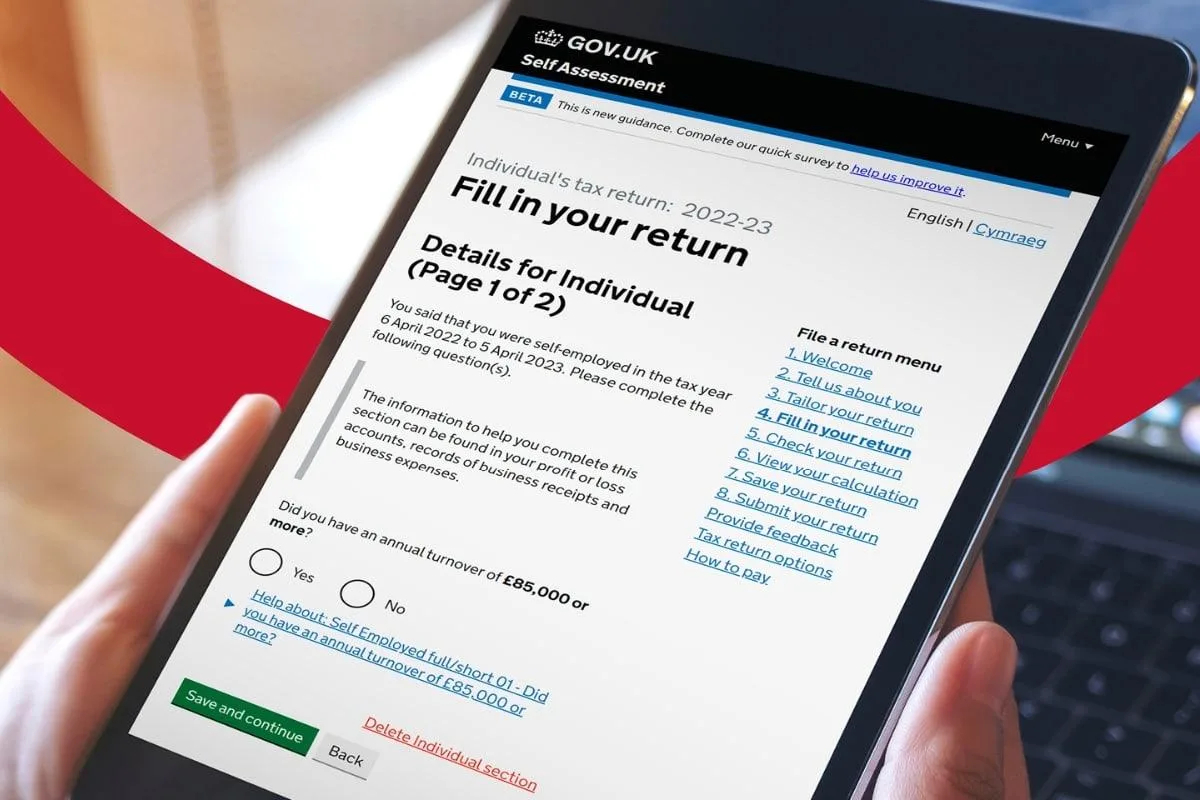
Paying National Insurance self employed is very easy. HMRC has included National Insurance in the Self Assessment process. Unless you are running a limited company and using PAYE, you will not have to pay any monthly contributions.
Once you have set up your business, you should:
- Register with HMRC: You should register for Self Assessment and Self Employment with HMRC as soon as possible after starting your business. This needs to be done by 5th October after the end of the tax year you started trading.
- Keep Accurate Records: Keep accurate records of your sales invoices, bank statements and allowable expenses during the tax year to calculate your net profit.
- Complete Tax Return: When completing your Self Assessment Tax Return (SA100) online, you will need to include your self-employed income on the SA103 pages.
- National Insurance Calculated: Once you have completed your tax return, HMRC will automatically calculate your Income Tax and National Insurance.
- Pay Online: Pay online by the due date. The first thing you need to do is register for Self Assessment.
Tip:
Save around 25-30% of your gross income into a business savings account each month. This will cover your Income Tax and National Insurance. This will avoid any cash flow issues when your Self Assessment is due.
Due Dates and Payment Options
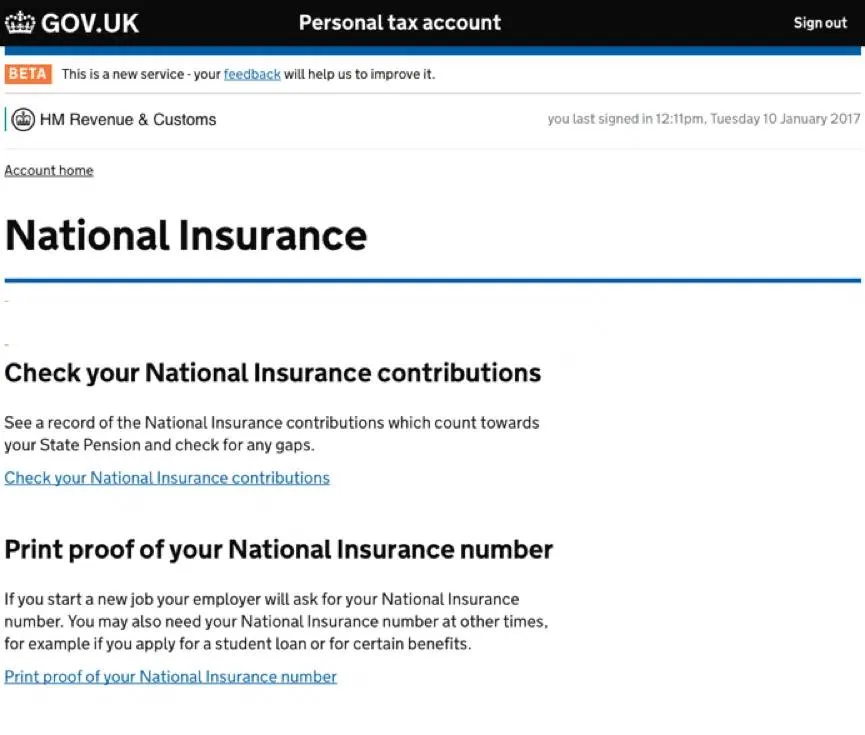
There are a few options to pay national insurance self employed. This can be done via your online HMRC tax account. Your National Insurance will be due on the same dates as your Self Assessment Income Tax:
- 31st January: Balancing payment and first payment on account for the previous tax year.
- 31st July: Second payment on account for the current tax year. Class 4 NICs will be included in your payment on account calculations.
HMRC offers a variety of secure payment methods:
- Approved online bank transfer (Faster Payments, CHAPS & Bacs).
- Debit card or company credit card via GOV.UK.
- Direct Debit.
- At your bank branch with an HMRC payment slip.
You can decide how you want to pay National Insurance self-employed depending on whether you want to pay annually or monthly.
Common Mistakes to Avoid
Not planning how to pay National Insurance self-employed can cause you to have unexpected tax bills and statutory interest charges from HMRC.
Common mistakes include:
- Failure to Register: If you fail to register for Self Assessment by 5th October, you could be charged failure to notify penalties.
- Forget payments on account: Many sole traders forget they will have to pay 50% payment on account in their first year. This will be included in your bill on the 31st January.
- Not paying voluntary Class 2: If you don’t pay voluntary contributions and have profits under £6,725, you may have gaps in your qualifying years for the full UK State Pension.
Understanding how to pay National Insurance self-employed will help to keep your business up to date with its tax obligations and ensure your future state benefits aren’t affected. If you find calculating your contributions, allowable expenses and due dates too much, we can help! Our expert accountants can complete your full tax return. View our official tax return services page to see how we can help make this easier for you.
FAQs
How do I pay National Insurance when self-employed and have a PAYE job?
If you are employed and self-employed, you will pay Class 1 NIC through your employer and Class 4 NIC through your Self Assessment on your self-employed profits. HMRC will automatically apply a maximum limit each year to ensure you don’t pay more than you should.
What if I have profits under £6,725?
If you have profits under the Small Profits Threshold (£6,725), you won’t have to pay Class 4 National Insurance. However, you can still choose to pay voluntarily.
Can I claim National Insurance as an allowable expense?
No. National Insurance is a personal tax and cannot be claimed as an allowable expense.
Can I pay my National Insurance in monthly instalments?
Yes. You can set up a Budget Payment Plan via your HMRC online account. This will allow you to pay weekly or monthly contributions towards your future Self Assessment tax and National Insurance.
If you need help with your Self Assessment tax return or National Insurance calculations, contact Asmat & Co Accountants !
Need Help With Your Accounts Or Tax?
Whether you need support with self assessment, VAT returns, payroll, bookkeeping, CIS, company accounts or corporation tax, Asmat & Co Accountants can provide clear, practical advice for your business or personal finances.